End of Summer Tax Wisdom: Catch Up on Tax Filings

Ruth Horst
How many Canadians are behind in filing their tax returns? It turns out there are millions. According to the National Post, at the end of April 2026 there were an estimated 9 million Canadians, that’s 28%, that still had not filed their tax returns.
As of August 16, 2026, 32,925,880 tax returns have been filed but there are many still outstanding. And despite of audit threats with significant penalties for those who owe, the reality is many of those millions of delinquent tax filers do miss out on thousands of dollars owed to them, permanently. An important deadline is coming up on October 30, 2026 for example.
Avoid the Permanent Miss: The Canada Carbon Rebate, formerly known as the Climate Action Incentive (CAI) and then the Climate Action Incentive Payment (CAIP), was available from 2018 to 2024, to residents of Alberta, Saskatchewan, Manitoba, Ontario, New Brunswick, Newfoundland and Labrador, Nova Scotia, and Prince Edward Island. From 2018 – 2021 the benefit was available only to residents of 4 provinces Manitoba, Ontario, Saskatchewan and Alberta/New Brunswick, depending on the yea r. The refundable tax credit was only available to provinces and territories who had instituted their own carbon tax.
Until the 2020 tax year the credit was reported on line 45110 of the T1. From 2021 onwards the program switched to quarterly payments. In 2024 the program was renamed to the Canada Carbon Rebate. The program officially ended March 15, 2025, with the last payment issued April 2025.
This refundable tax credit was not income tested and the amount of the payment was dependent on the size of family, province of residence, and whether the residence was in a rural area.
The November 4, 2025 Budget proposed to end these payments for any adjusted returns filed for late filers after Friday, October 30, 2026. Bill C-31 which contains the proposal must still be given Royal Asset to become law. Nonetheless, if you have clients in those provinces, now is the time to proactively set up appointments to retrieve the cash which will otherwise be forever lost.
How much can be lost?
There was only one payment for the 2024 base year - for the month of April 2025 (the rural supplement was 20% of the base amount):
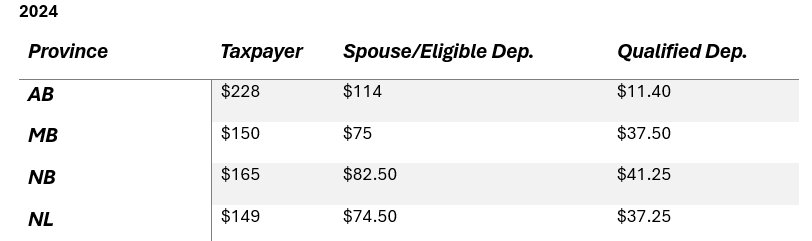
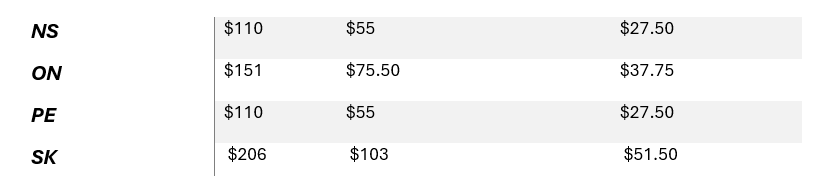
The base amount for the 2023 year for the Canada Carbon Rebate are as follows:
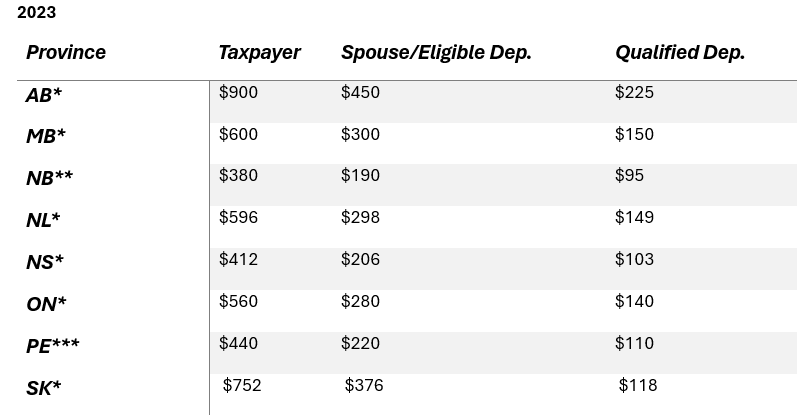
* The rural supplement (outside of a CMA) is 20% of the base amount.
** The rural supplement (outside of a CMA) is 20% of the base amount. For April 2024, there was a retroactive amount for the 2022 base year.
*** The rural supplement is included in all base amounts, since all residents of PE are eligible.
Normal Reassessment Periods. The CRA operates under a three-year normal reassessment period for individuals. Generally, the CRA has three years from the date of the original Notice of Assessment to reassess a personal tax return. Once this period has expired, the return is generally considered statute-barred. This limitation can also affect the ability to claim certain refundable and non-refundable tax credits or request adjustments.
For an unfiled prior-year tax return, different rules may apply depending on the credit or refund being claimed.
For many refund claims, the relevant limitation is measured from the end of the tax year rather than from the date of a Notice of Assessment. The CRA also has discretion under the Taxpayer Relief Provisions to allow certain refunds or adjustments beyond the normal three-year period, subject to a 10-year limitation.
Don’t Forget: October 30, 2026. In the case of the Canada Carbon Rebate, the proposed deadline for eligible claims for the 2021–2024 tax years is October 30, 2026. Accordingly, clients who may be entitled to these amounts should be encouraged to file any outstanding returns as soon as possible.
Other Time-Limited Credits and Refunds:
- Pension Splitting: The CRA may allow a late or amended pension-splitting election in certain circumstances if the request is made no later than three calendar years after the filing due date for the applicable year. For the 2022 tax year, this generally makes December 31, 2026 the final date to request a late or amended election. Both spouses or common-law partners must agree to the amendment or revocation.
- CPP Overpayment – Line 44800: The time limit for requesting a refund of excess CPP contributions is four years from the end of the year in which the overpayment occurred. Therefore, December 31, 2026 is the last day to request a refund of an overpayment arising in the 2022 tax year. The normal Taxpayer Relief provisions do not extend this CPP refund deadline.
- EI Overpayment – Line 45000: The time limit for requesting a refund of excess EI premiums is three years from the end of the year in which the overpayment occurred. Therefore, December 31, 2026 is the last day to request a refund of an EI overpayment arising in the 2023 tax year.
Use the Taxpayer Relief Provisions. For many other situations, taxpayers have 10 years from the end of the calendar year in which the relevant tax year ended to request certain forms of taxpayer relief. The CRA may, in appropriate circumstances, allow a refund or adjustment beyond the normal three-year reassessment period, or cancel or waive penalties and interest.
Usually, a T1 Adjustment is the simplest way to correct an error or omission on a tax return. However, if the adjustment results in a balance owing, penalties and interest may apply.
Where exceptional circumstances have prevented a taxpayer from meeting their tax obligations, such as a serious illness, accident, or natural disaster, the Taxpayer Relief Provisions may provide a mechanism to request relief from penalties and interest.
In other situations, involving previously unreported income or information, the Voluntary Disclosures Program (VDP) may be appropriate. A valid voluntary disclosure can provide significant relief from penalties and, depending on the circumstances, partial relief from interest. The tax itself remains payable.
Avoid penalties: If a taxpayer owes money to the CRA, it is generally best to correct errors or omissions voluntarily rather than waiting for the CRA to identify them. A false statement or omission made knowingly or under circumstances amounting to gross negligence can result in a penalty of 50% of the understated tax or overstated credits attributable to the false statement or omission.
In the most serious cases involving tax evasion, criminal prosecution can result in fines of up to 200% of the tax sought to be evaded, in addition to potential imprisonment.
The key message for clients is simple: file outstanding returns and correct errors as soon as possible. Waiting can result in the loss of refunds or credits, additional interest and penalties, and, in serious cases, much more severe consequences.
 Help & Contact: 1 866 953 4769