After Tax Season: Plan to Help Clients Age with Dignity in Retirement

Did you know that in 2026, about one-fifth (19.5%) of Canadians is age 65 or older? That’s up from 12.6% in 2000, and represents more than 8 million seniors. Retirement planning is important for everyone, but especially for women who tend to live longer and earn less over their lifetime than men. Aging with dignity is a big factor, and for these reasons a close look at lifespans and a new tax provision is critical.
Lifespans. Life expectancy for a male at 65 is 19.43 years; for a female, 22.15. What’s important to note is that half of people in long term care are older than the average life expectancy – over age 85 and many are near end of life or have significant physical and cognitive issues according to a report by the CIHI, published February 2026. According to this report, older resident safety is a big concern. 
It notes that “in 2024–2025, 24% of LTC residents in Canada received an antipsychotic medication without a diagnosis of psychosis. . .and that the Canadian average is higher than rates in the United States, Australia and Sweden, which can contribute to adverse reactions, cognitive decline, falls and even death.[1]”
Other challenges include outdated buildings, equipment and staffing shortages.
It’s a problem for women in particular. While women aged 65 to 69 represented 51.5% of the older population, they accounted for 74.1% of the population aged 95 to 99 years on July 1, 2023.
PSWs Tax Credit. The Spring Economic Statement introduced a refundable Personal Support Worker’s Tax Credit for 2026-2030. It will be calculated at 5% of eligible earnings to maximum of $1,100 per year. Meant to reward people who are working with seniors primarily, it’s a step in the right direction to attracting more people to solve the staffing/compensation issues. But it may be difficult to communicate this.
Be sure to join us at the May 27 CE Savvy Summit, Evelyn Jacks will lead a timely session on “New Directions: Tax Changes That Impact 2026 Investment, Retirement & Estate Planning.” The focus is clear: helping advisors navigate what comes next will include critical thinking about the soft issues as well as complex tax changes that will continue to perplex taxpayers, their families and challenge the evolution of the tax preparation industry in particular.
Planning Beyond April 30. While individual returns may be filed, key planning opportunities remain—particularly for proprietors facing the June 15 filing deadline. Capital gains transactions, in particular, require careful timing and coordination with broader retirement and estate strategies.
Advisors attending this session will gain practical guidance on how to:
- Implement complex tax planning options at the death of a taxpayer including options in filing optional returns and the Graduated Rate Estate
- Anticipate new tax pressures affecting high earners, real estate owners, and cryptocurrency investors
- Avoid costly surprises with proactive, post–tax season planning
From Compliance to Advisory
The session reflects a broader shift in professional practice. Clients are no longer looking for year-end reporting alone—they expect forward-looking advice that integrates tax, investment, and succession planning. In today’s high tax, high inflation environment, that means helping clients make informed decisions about timing, structure, and long-term financial outcomes.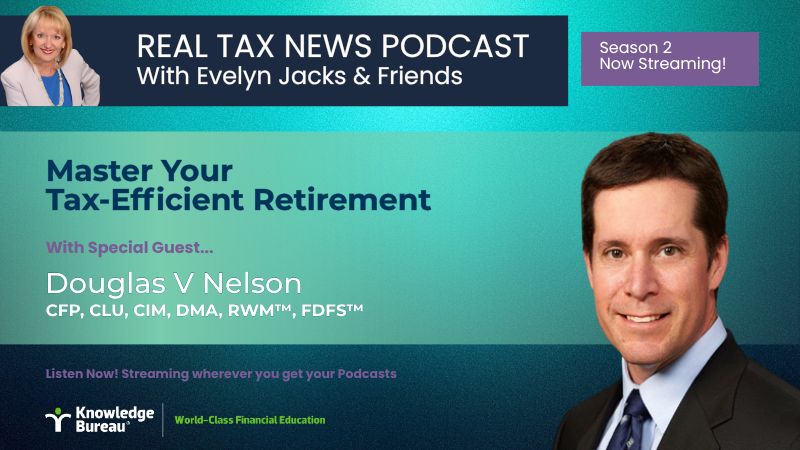
A Timely Opportunity to Lead
The May 27 CE Savvy Summit provides a focused opportunity to strengthen these skills in a live-virtual setting, alongside a faculty of experienced professionals. For advisors looking to stay ahead—and stand apart—this session offers practical insight at exactly the right time.
Check out our dynamic speakers and the full agenda:
- Tax Changes That Impact 2026 Investment, Retirement & Estate Planning with Evelyn Jacks
- Retirement Income Layering at Every Life Stage with Doug Nelson
- Estate Planning on Death of a Taxpayer with Leanne Rodrigo
- Filing T3 Returns with Ruth Horst
- Connecting the Dots in Your Practice with the Society of Distinguished Designates
Receive the Presentations PLUS: Your Online Course - Advanced Retirement & Estate Planning Update:
- What’s New for 2026?
- Intro to Tax Efficient Retirement Income Planning
- Intro to Completing the Final T1 Return
- Intro to Completing the GRE Return
- Intro to Completing Trust Returns
Course available for pre-reading May 26, Completion Date August 31
[1] Appropriate Use Coalition. Antipsychotics in LTC: Setting a target for appropriate use. Accessed December 10, 2025.
 Help & Contact: 1 866 953 4769