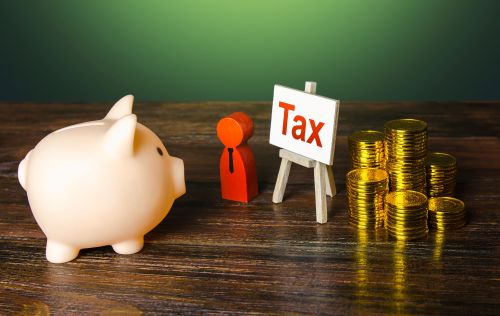
Advanced Income Tax Rulings
The federal government has taken steps recently to attract more investment in Canada. That’s sure to create some new tax questions that require Advanced Income Tax Rulings (AITR). A new measure to facilitate a faster response was announced on September 14 and is intended to attract business investment of large amounts. Specifically, for investments of $1 billion or more, the CRA will prioritize advance income tax rulings. The measure took effect the day it was announced. Here’s what you need to know:How to Determine Whether a Gain is Income or Capital?
 Your client has just flipped a principle residence, sold a speculative piece of property or traded frequently in his or her TFSA. Is this a business transaction, a capital gain or an exempt transaction? In order to determine whether a gain is of income or capital nature, there is no determinative test. However, there are some clues to follow in anticipating the tax outcome and an important precedent-setting case.
DAC Sneak Peek: Meet Our Speakers & This Year’s DAC-in-a-Box
 The experience at this year’s Virtual DAC Acuity Conference may just beat out last year’s – which the Globe and Mail touted as one of Canada’s most innovative virtual conferences. Check out this sneak peek through our new speaker videos and DAC-in-a-Box program guide, and then enrol by September 30 to take advantage of early-bird tuition prices.
Uncertainty Lingers: Majority Won’t be Hiring in 2022
 The reasons are varied, but 60% of KBR readers polled last month said they won’t be hiring new seasonal staff in 2022 and the prevailing reason is uncertainty. Those who will be hiring won’t be doing so before year end but are busy making training plans now. Here are some of their thoughts on preparing for tax season 2022:
New! August Updates to EverGreen Explanatory Notes
 Tax pros need to stay up-to-date all year long! Knowledge Bureau’s Evergreen Explanatory Notes should be your go-to reference for answers personal, corporate and GST/HST questions. It’s your own top notch tax research library that seamlessly links you to CRA publications and forms while providing educational notes and examples. Best of all it is included in all certificate courses or as a stand-alone subscription. Here are the topics updated in August:
Claiming Quarantine Hotels & Testing Costs
 It’s a frustrating time: the fourth wave is upon us, and soon too will be tax season 2022. While the need to stay in quarantine hotels ended on August 9, many Canadians expended significant sums to come back to Canada from abroad during the pandemic. Are those costs deductible? The answer depends on the taxpayer profile and circumstances of the expenditure, according to recent CRA interpretations.
Long Term Care: Turning Grief and Rage into Change
 It’s an issue that made devastating headlines for months: the suffering and death of vulnerable seniors before our very eyes. All the worse for the raw fact that they lived in deplorable conditions of neglect. According to Karen Henderson, Founder of the Long-Term Care Planning Network, planning for our own aging is a critical element of tax and financial planning discussions with advisors. But it should also be a key issue in today’s national discussions to enable responsible change. Her passionate story is Knowledge Bureau’s Special Guest Report this week: