
Advanced Income Tax Rulings
The federal government has taken steps recently to attract more investment in Canada. That’s sure to create some new tax questions that require Advanced Income Tax Rulings (AITR). A new measure to facilitate a faster response was announced on September 14 and is intended to attract business investment of large amounts. Specifically, for investments of $1 billion or more, the CRA will prioritize advance income tax rulings. The measure took effect the day it was announced. Here’s what you need to know:The New CEWS Audit: New Risks for SMEs in Canada
 The CRA has at least 2,500 CEWS audits of large Canadian businesses underway. It is anticipated that what they learn from those audits will then be used to audit small and medium-sized businesses across the country over the next decade. There is no audit limitation period, meaning that every business should anticipate having to defend their CEWS claims at some point in time. The September 21 CE Summit, will cover this topic in depth with one of Canada’s leading tax litigators and a tax lawyer with broad experience in resolving audits, David Robertson and Evelyn Tang from EY Law LLP.
DAC Acuity 2022: Hear Insights from Top-Flight Industry Thought Leaders
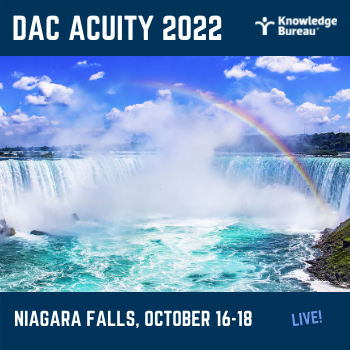 Be sure to register by August 31 to take advantage of the early bird conference discounts for DAC, October 16 -18 in beautiful Niagara Falls. You won’t want to miss the incredible line up of topflight speakers who will bring the future of finance to you in spades of insightful thought leadership. It is the only conference for a multi-advisory audience and the one you should not miss if you are a business leader or owner-manager in the tax or financial services. Consider these critical topics:
Employer-paid Cell Phones
 Like all employer-paid expenses, the concept is that, if the employer is the primary beneficiary of the payment, the payment is not taxable to the employee. But, if the employee is the primary beneficiary, then the benefit is taxable. For cell phones and cell phone service, the same concept applies, but the details can become confusing.
Inflation, Inflation, Recession, Recession, let’s just call the whole thing off?
 We find ourselves in an unusual situation with higher-than-normal inflation while simultaneously seeing signs of either an ongoing or approaching recession. It’s not a time for knee-jerk overreactions. Rather, the current cloud gathering should come as a reminder that long-term wealth is built by well-researched investments constructed around the realities of fluctuating economic circumstances.
Executor: Tips when preparing to file final returns
 Have you agreed to be an executor for a loved one? If so, I just know you want to be ready and informed about what to do when the time comes. When it is time to ‘be’ the executor, over and above the additional tasks you have to do, you could be also faced with the emotions of your loss. For that reason, amongst others, the time to check into what is involved is NOW!
Knowledge Bureau Launches Industry Leading Online Education Portal
 National Financial Education Institute Knowledge Bureau is pleased to announce the launch of its new virtual campus: learn.knowledgebureau.com. The mission of the second campus, which complements the Specialized Credentials offered through www.knowledgebureau.com, will focus on an expanded curriculum of short professional courses available by subscription, especially designed for entrepreneurial advisors in search of both technical and business education.